Berry
 Strawberry




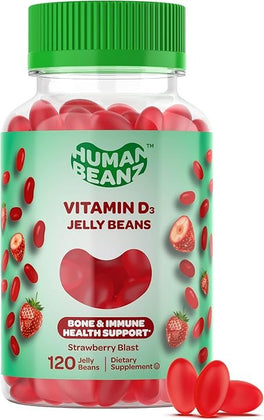
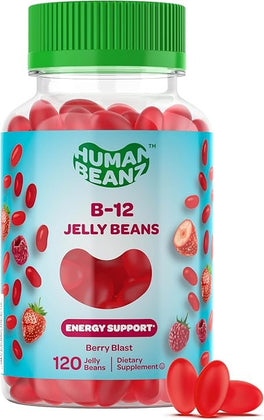
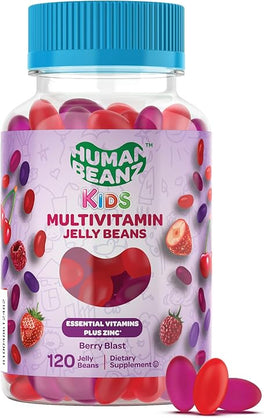

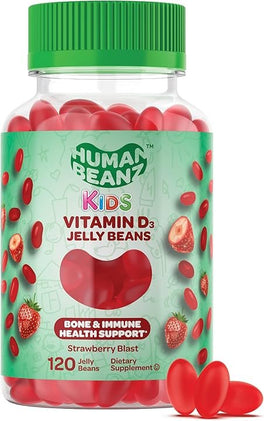

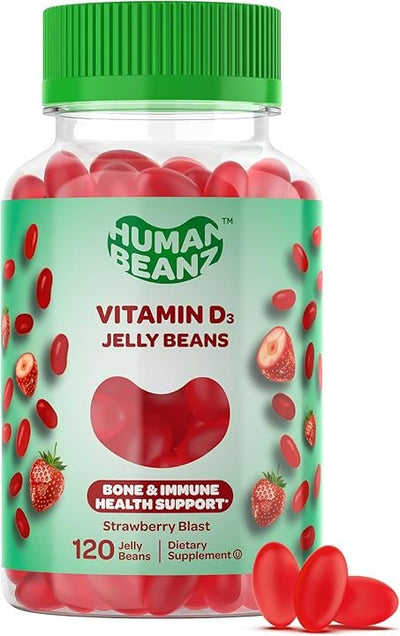
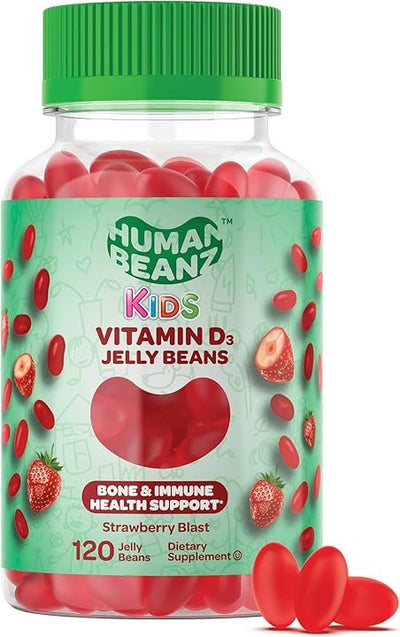
Short answer: From roughly November to March, the sun over most of the US sits too low for your skin to make much vitamin D, and most of us spend daylight hours indoors anyway. Food rarely makes up the difference. If you're not getting regular midday sun on bare skin (you're not, it's winter), a daily vitamin D3 taken with a meal is the simplest way to keep your intake steady. Our Vitamin D3 gives you 2,000 IU in four strawberry jelly beans, and kids get their own 1,000 IU version.
Where the sun goes in winter
Your skin makes vitamin D when UVB rays from the sun hit it. That's the whole deal. It's a great deal in July.
In winter, the sun sits lower in the sky, so its light travels through more atmosphere and most of the UVB is filtered out before it reaches you. When researchers measured this in Boston, they found that from November through February, skin there made essentially no vitamin D at all, however long people stayed outside. The usual rule of thumb: if you live north of a line running roughly from San Francisco to Richmond, Virginia, the winter sun isn't doing much for your vitamin D.
Then add the modern winter routine. Leave home in the dark. Sit under office lights. Leave work in the dark. Watch a show about people who go outside.
And no, sitting next to a sunny window doesn't count. Window glass blocks UVB. Your houseplant is getting more out of that window than you are.
Who runs low first
- Indoor people. Office workers, remote workers, night-shift workers, gamers, and anyone whose daily commute is bed to couch.
- People with darker skin. More melanin means the skin needs more sun exposure to make the same amount of vitamin D.
- Adults over 70. Skin makes vitamin D less efficiently with age, which is why the recommended intake goes up to 800 IU.
- Kids in winter. Between school, homework and screens, plenty of kids see daylight mainly through a bus window.
- The sunscreen faithful. Great for your skin. Not much vitamin D gets made through SPF 50.
Can't I just eat it?
You can try. Vitamin D is one of the hardest nutrients to get from food, because very few foods contain much of it naturally. Here's roughly what common sources give you:
| Food | Vitamin D (approx.) |
|---|---|
| Salmon, cooked, 3 oz | 570 IU |
| Mushrooms exposed to UV light, ½ cup | 366 IU |
| Fortified milk, 1 cup | 120 IU |
| Fortified breakfast cereal, 1 serving | 80 IU |
| Egg, 1 large | 44 IU |
| Tuna, canned in water, 3 oz | 40 IU |
Salmon does well. Everything else is trying its best. To reach the 600 IU most adults need from eggs alone, you'd need about 14 eggs a day, every day. Hugh tried. Hugh has been asked to stop.
How much vitamin D do you actually need?
These are the general daily recommendations for healthy people in the US, along with the upper limit: the most you should get per day from all sources combined, unless your doctor tells you otherwise.
| Age | Recommended per day | Upper limit per day |
|---|---|---|
| 1 to 3 years | 600 IU (15 mcg) | 2,500 IU |
| 4 to 8 years | 600 IU (15 mcg) | 3,000 IU |
| 9 to 70 years | 600 IU (15 mcg) | 4,000 IU |
| 71 and older | 800 IU (20 mcg) | 4,000 IU |
Some people need more than the standard amount, and the only way to know where you stand is a simple blood test (25-hydroxy vitamin D) that your doctor can order. What you shouldn't do is assume more is better. Vitamin D is fat-soluble, so your body stores it rather than flushing out the extra.
For reference: our adult Vitamin D3 is 2,000 IU per serving, and Kids Vitamin D3 is 1,000 IU. If you also take a multivitamin (both of ours contain vitamin D, as D2), add the numbers up and keep the total under the upper limit.
D3 vs. D2: does the form matter?
Supplements use one of two forms. D2 (ergocalciferol) comes from plants and fungi. D3 (cholecalciferol) is the same form your skin makes from sunlight. Both work, but studies show D3 tends to raise blood levels more effectively and keep them up longer. That's why both of our standalone vitamin D products use D3.
How to take vitamin D3 so it counts
- With a meal that has some fat. Vitamin D is fat-soluble, so it absorbs better alongside avocado, eggs, nuts, cheese, olive oil or a suspicious amount of peanut butter.
- Every day, not when you remember. Steady intake beats occasional heroics. Pick a meal and attach it to that.
- Start before you feel it. Levels drift down slowly over the winter. The best time to start a winter routine is the fall. The second best time is today.
- Keep going outside anyway. The winter sun won't do much for your vitamin D, but daylight still helps set your body clock, which helps your sleep. A lunchtime walk is never a bad idea.
Pro tip: Put the jar right next to something you already touch every morning: the coffee maker, the kettle, the cereal. A vitamin you can see is a vitamin you take. (We wrote a whole guide on actually remembering your vitamins, because apparently that's the hard part.)
What about kids?
Kids need the same 600 IU a day as most adults, and in winter they spend most of their daylight hours in a classroom. Kids Vitamin D3 is two strawberry jelly beans a day with 1,000 IU of D3, for ages 2 and up. The usual rules apply: not for children under 2, beans get chewed thoroughly, an adult hands them out, and the bottle lives somewhere little hands can't reach. Check with your pediatrician before you start. Our parent's guide to Human Beanz Kids has the rest.
The winter plan, in one paragraph
Get daylight when you can, eat the salmon if you like salmon, and cover the rest with D3 taken with a meal. Four jelly beans a day, and one bottle lasts 30 days, so about five bottles gets you from November to spring. Indoor workday? Pair it with B12 for energy support, and build a bundle to save on both. Bernie says the sun will be back in April. Bernie is not a meteorologist.
Frequently asked questions
Can I get vitamin D from sunlight through a window?
No. Window glass blocks almost all UVB, which is the part of sunlight your skin needs to make vitamin D. The warm sunny spot by the window feels nice, but it isn't doing anything for your levels.
Should I take vitamin D in the morning or at night?
Timing matters less than two things: taking it with a meal that contains some fat, and taking it every day. Pick whichever meal you're most consistent with.
Can you take too much vitamin D?
Yes. For adults, the upper limit is 4,000 IU a day from all sources combined, unless your doctor recommends otherwise. Our adult Vitamin D3 is 2,000 IU per serving. If you take more than one supplement, add up the vitamin D in all of them.
Is D3 better than D2?
Both forms work, but research shows D3 (cholecalciferol) generally raises and maintains blood levels more effectively than D2. D3 is also the form your skin makes from sunlight.
Should I take vitamin D all year or just in winter?
Plenty of people take it year-round, especially if they spend most days indoors. Others with regular summer sun exposure only take it in the darker months. A blood test is the easiest way to know what you actually need, so ask your doctor.
*These statements have not been evaluated by the Food and Drug Administration. This product is not intended to diagnose, treat, cure, or prevent any disease.