Berry
 Strawberry



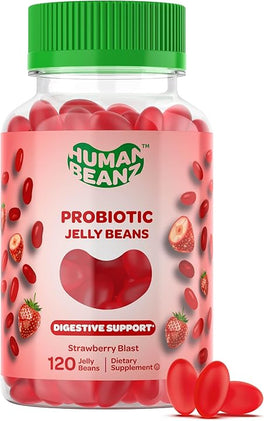

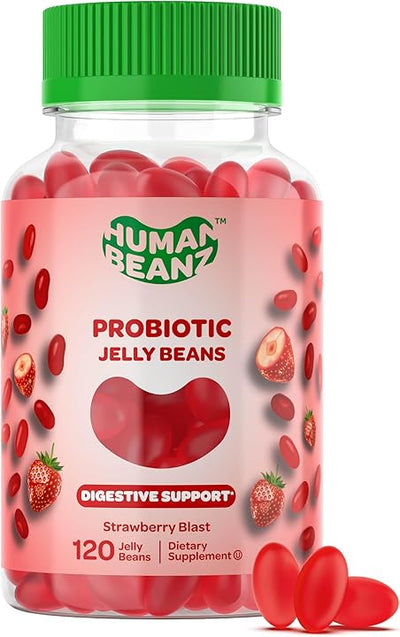
Short answer: The gut health trends worth keeping are the unglamorous ones: more fiber (added slowly), more fermented foods, and, if you want a specific strain in a measured amount, a probiotic you actually take every day. The ones to skip are cleanses, detox teas and anything promising a flat stomach by Friday. Our Probiotic packs 2 billion CFU of Bacillus coagulans into four strawberry jelly beans, no fridge required.
Your gut has a publicist now
For most of human history, the gut was a private matter. Now it has a social media following. There's kombucha in every fridge, "gut-friendly" printed on soda cans, and people filming themselves eating sauerkraut straight from the jar for an audience of thousands.
Some of this is genuinely good news. Your gut microbiome, the trillions of bacteria living in your digestive tract, plays a role in digestion, immunity and more, and research on it has exploded. (We covered the immune side in The Gut-Immune Connection.) Some of it is a man in his kitchen, three weeks into fermenting something he can no longer identify.
So let's sort the trends, with a straight face.
The 30-second glossary
- Probiotics are live microorganisms that provide a health benefit when you take them in adequate amounts. The key words are specific strain and adequate amount.
- Prebiotics are food for your gut bacteria, mostly certain types of fiber found in foods like onions, garlic, bananas, oats and beans.
- Fermented foods are foods made with the help of microbes: yogurt, kefir, kimchi, sauerkraut, kombucha, miso. Some still contain live cultures. Many shelf-stable versions are heat-treated, which means the microbes are gone. Not every fermented food is a probiotic.
The scorecard
| Trend | Verdict | In one line |
|---|---|---|
| Fermented foods | Keep | Real research, real food, hard to overdo |
| Fibermaxxing | Keep, minus the "maxxing" | Most people need more fiber, just not all at once |
| Probiotic supplements | Keep, if you're consistent | A specific strain in a measured amount |
| Kombucha | Fine drink, not a plan | A good soda swap with limited human research |
| Prebiotic sodas | Fine drink, not a plan | Less sugar than soda, a few grams of fiber |
| Cleanses and detox teas | Skip | Your liver and kidneys already have this covered |
The trends, one by one
Fermented foods: the underrated winner
Yogurt, kefir, kimchi, sauerkraut and miso aren't new. They're just having a moment. And the research backs them up better than most trends: in a 2021 Stanford study, people who ate several servings of fermented foods a day for ten weeks ended up with a more diverse gut microbiome and lower markers of inflammation.
Look for refrigerated products labeled "live and active cultures," since shelf-stable jars are usually heat-treated. Start with a serving a day.
Verdict: Keep. The most boring trend on the list, and the best one.
Fibermaxxing: right idea, wrong speed
Fibermaxxing is the trend of loading up on fiber at every meal. The idea is sound. Fiber feeds your gut bacteria, supports regularity and helps keep you full, and most American adults eat around 15 grams a day when the recommendation is closer to 25 grams for women and 38 for men.
The "maxxing" part is where it goes wrong. Jumping from 12 grams to 50 overnight is a reliable way to spend the evening bloated and regretting your chia pudding. Increase fiber gradually over a few weeks and drink more water as you go. Our fiber guide has easy ways to close the gap.
Verdict: Keep, minus the "maxxing."
Probiotic supplements: specific and steady
A food gives you whatever microbes happened to show up. A probiotic supplement gives you a specific, named strain in a measured amount, every day. The benefits depend on the strain, so it's worth knowing which one you're taking.
Ours is Bacillus coagulans, one of the well-studied, spore-forming strains. Spores are naturally tough, which helps them survive stomach acid and means no refrigeration. That matters more than it sounds: a probiotic forgotten at the back of the fridge door does exactly nothing.
Verdict: Keep, if you take it every day.
Kombucha: a decent drink with a big reputation
Kombucha is fermented sweetened tea. Unpasteurized versions contain some live microbes, plus acids and traces of alcohol, and some brands add a surprising amount of sugar. As a swap for regular soda, it's a fine choice. As a gut health plan, the evidence from human studies is still thin, and the microbes inside aren't standardized the way a probiotic's are.
If you brew your own, follow a reliable recipe and keep everything very clean. And don't name your SCOBY. It gets weird.
Verdict: Fine drink, not a plan.
Prebiotic sodas: a better soda, not a gut fix
These are sodas with added fiber, often inulin, and much less sugar than the regular stuff. Swapping one for a classic soda is a genuine upgrade. But a can usually has only a few grams of fiber, which won't transform anything, and inulin can make some people gassy.
Verdict: Fine drink, not a plan.
Cleanses and detox teas: please don't
Your liver and kidneys detox you around the clock, for free. Many detox teas work mainly as laxatives, which can leave you dehydrated without "resetting" anything. There's no good evidence that cleanses improve gut health.
Verdict: Skip. Your colon did not ask for this.
Where a probiotic jelly bean fits
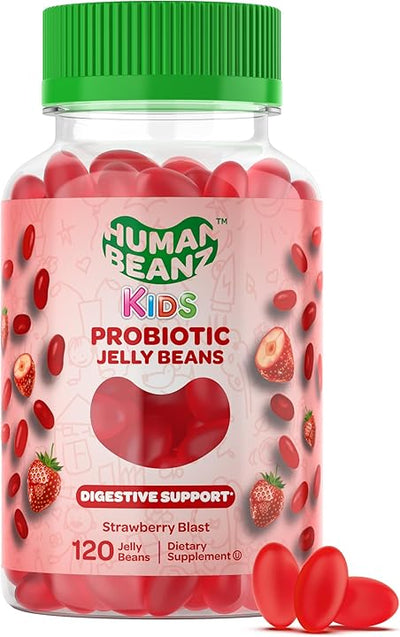
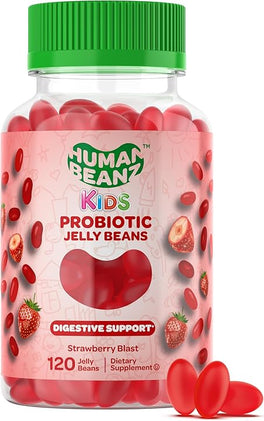
A probiotic doesn't replace fiber or fermented foods. It adds something they can't promise: the same strain, in the same amount, every single day. Our Probiotic is 2 billion CFU of Bacillus coagulans in four strawberry jelly beans, shelf-stable, 9-Way Free and vegetarian. For kids aged 2 and up there's Kids Probiotic, with 1 billion CFU in two beans.
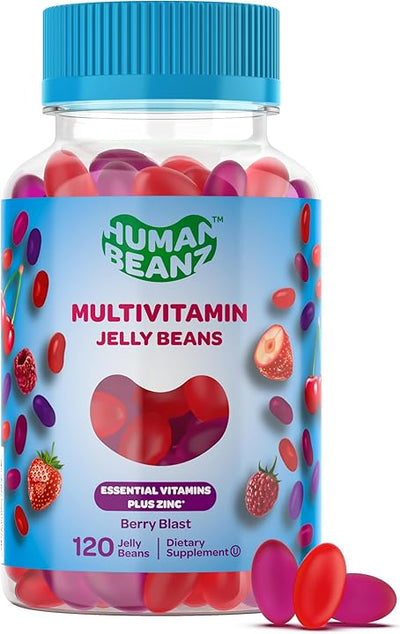
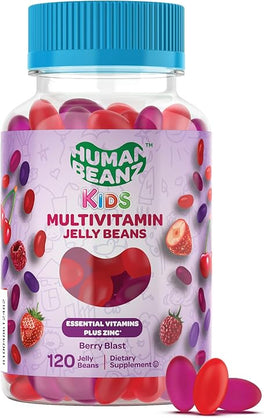
The most popular pairing is Probiotic + Multivitamin + Zinc: gut support plus your daily basics. You can mix them in a bundle.
A gut routine you'll actually keep
- Add one high-fiber food a day (oats, beans, berries, lentils) and build up from there.
- Have a serving of a fermented food most days.
- Drink more water, especially while you're adding fiber.
- Take your probiotic at the same time every day. Breakfast works well.
- Sleep and stress count too. Your gut and your brain talk to each other constantly, mostly about you.
Pro tip: If you start more fiber and a probiotic in the same week and feel bloated, slow down the fiber first. Your gut likes change the way Meg likes small talk: slowly, and in small amounts.
Frequently asked questions
Is kombucha a probiotic?
Not exactly. Unpasteurized kombucha contains live microbes, but the strains and amounts vary from bottle to bottle and usually aren't tested, so it doesn't meet the scientific definition of a probiotic. It's a fermented drink, and a perfectly good one.
What is fibermaxxing?
A social media trend of eating as much fiber as possible at every meal. More fiber is a good goal for most people, but increase it gradually and drink plenty of water to avoid bloating and discomfort.
Do I need a probiotic if I already eat fermented foods?
Not necessarily. Fermented foods are great for gut diversity. A probiotic supplement adds a specific strain in a consistent amount every day. Many people do both.
When is the best time to take a probiotic?
Consistency matters more than timing. Taking it with breakfast at the same time each day makes it easy to remember.
Can kids take probiotics?
Our Kids Probiotic is made for children aged 2 and up, at two beans a day. Check with your pediatrician first, and keep the bottle out of reach.
*These statements have not been evaluated by the Food and Drug Administration. This product is not intended to diagnose, treat, cure, or prevent any disease.