Berry
 Strawberry



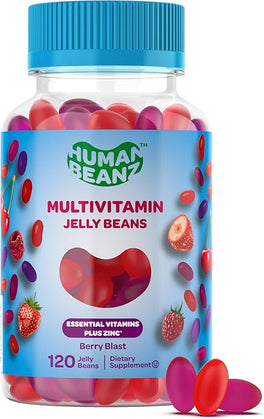
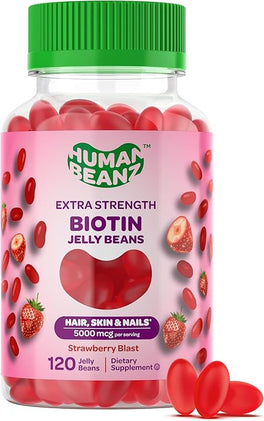
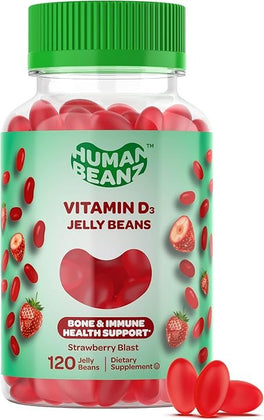
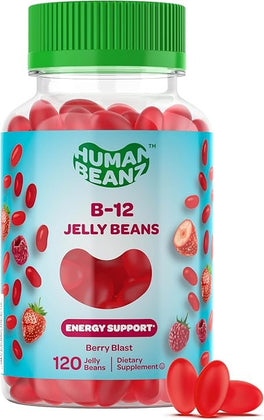

Short answer: Vitamin B12 helps your body turn food into energy and keeps your red blood cells and nerves working. If you're running low, which is common if you eat mostly plants, you're over 50, or you take certain medications, getting enough B12 can make a real difference. If your levels are already fine, extra B12 won't hit like a double espresso. Our Vitamin B12 gives you 1,000 mcg of methylcobalamin in three berry jelly beans, best taken in the morning.
Tired is the new normal
Being exhausted has quietly become a personality trait. We schedule coffee like medication, treat 3 p.m. like a natural disaster, and say "I'm fine" with the energy of a phone at 3%.
Coffee helps, briefly. But caffeine doesn't actually give you energy. It blocks the chemical signal that tells your brain you're tired. It's a bit like fixing your car's fuel light by putting tape over it. Works great until it doesn't.
Vitamin B12 is a different kind of helper. It doesn't hide the signal. It's part of the machinery that turns breakfast into something your body can run on.
What B12 actually does
- Energy metabolism. B12 is one of the helpers your cells need to turn the food you eat into usable energy.
- Red blood cells. Your body needs B12 to make healthy red blood cells, the ones that carry oxygen around your body. Very low B12 can lead to a type of anemia, and one of its classic signs is feeling tired and weak. That's a conversation for your doctor, not for a jelly bean.
- Nerves and brain. B12 helps maintain your nerve cells and plays a part in normal brain function and mood.
In other words, B12 doesn't do anything flashy. It just keeps a lot of important systems running, which is exactly why you notice when you don't have enough of it.
Who tends to run low on B12
- Plant-based eaters. B12 is found naturally almost only in animal foods: meat, fish, eggs and dairy. Vegans, and many vegetarians, need fortified foods or a supplement to get enough. With more people going plant-based or "mostly plant-based," this is a bigger group every year.
- Adults over 50. As we age, the stomach makes less of the acid needed to release B12 from food. That's why adults over 50 are advised to get most of their B12 from supplements or fortified foods, where it isn't bound to food protein.
- People on certain medications. Metformin and long-term acid reducers (like proton pump inhibitors) can lower how much B12 you absorb. If you take either, ask your doctor about your B12.
- People with digestive conditions or a history of weight-loss surgery. Both can affect absorption.
Where B12 comes from in food
| Food | B12 (approx.) |
|---|---|
| Clams, cooked, 3 oz | 17 mcg |
| Salmon, cooked, 3 oz | 2.6 mcg |
| Milk, 1 cup | 1.3 mcg |
| Fortified breakfast cereal, 1 serving | 0.6 mcg |
| Egg, 1 large | 0.5 mcg |
| Vegetables, fruit, grains, beans | Essentially none, unless fortified |
Most adults need 2.4 mcg a day. If clams are a regular part of your week, congratulations, you're fine. Everyone else should read on.
What B12 won't fix (the honest part)
We'd love to tell you three jelly beans can undo a 1 a.m. scrolling habit. Legally, and also factually, we can't.
- If your B12 is already fine, taking more won't make you feel more energetic. It's not a stimulant.
- Sleep still runs the show. Adults need at least seven hours a night. No vitamin can negotiate with a 5-hour night.
- Other things cause tiredness too: low iron, thyroid issues, dehydration, stress, skipped meals, and too much screen time before bed.
- Ongoing, unexplained fatigue is worth a doctor's visit. A simple blood test can check your B12, iron and more.
Why the dose looks huge (and which form to choose)
The recommended amount for adults is 2.4 mcg a day, and our serving has 1,000 mcg. That's not a typo. Your body absorbs B12 through a system that can only handle a little at a time, so when you take a larger amount, only a small percentage gets absorbed. That's why most B12 supplements use higher amounts. No upper limit has been set for B12, because even high intakes have a low potential for harm.
B12 supplements mainly come in two forms. Cyanocobalamin is the most common and the most studied; your body converts it into active forms. Methylcobalamin is one of those active forms. Both can keep your B12 where it should be. We chose methylcobalamin for our B12 jelly beans.
How to take B12
- Mornings work well. It fits naturally into a breakfast routine, and you'll be less likely to forget it than at night.
- With or without food. B12 doesn't need a meal the way vitamin D does.
- Be consistent. If you were low, levels build back up over weeks, not days.
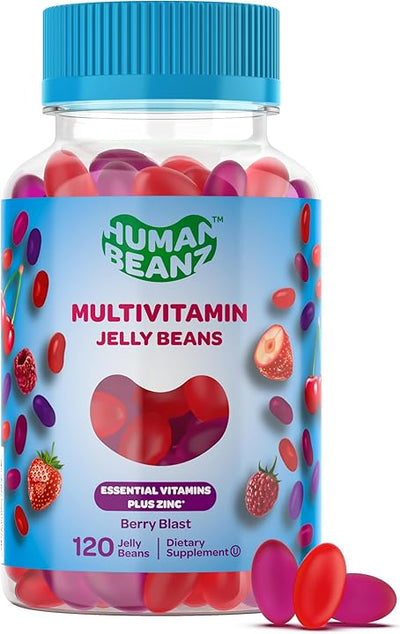
- Check for overlap. Our adult Multivitamin + Zinc already contains B12. If you take both, or take any medication, check the combination with your doctor.
Pro tip: Keep the jar next to the coffee maker and take your beans while the coffee brews. The coffee will still get all the credit. Let it have this.
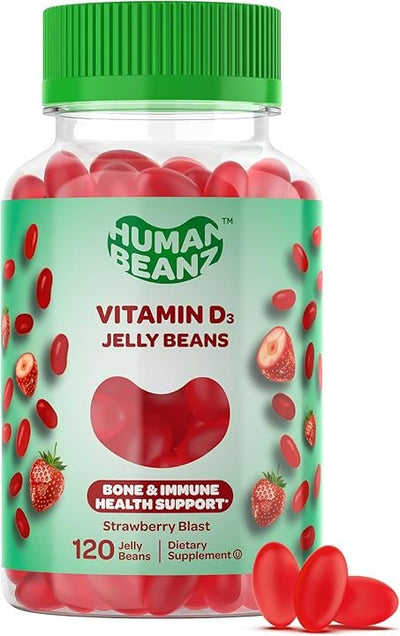
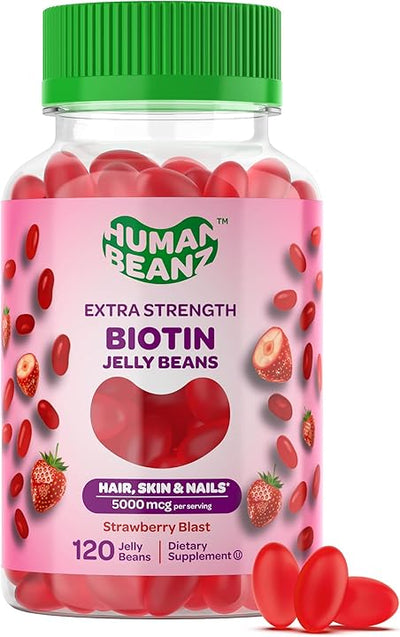
Popular pairings: B12 + D3 for long indoor workdays (more on that in our vitamin D in winter guide), and B12 + Biotin for a hair, skin and nails routine. Mixing two or more? Build a bundle.
Frequently asked questions
Does B12 give you energy right away?
No. B12 isn't a stimulant like caffeine. It supports the processes your body uses to make energy, so if you were low, you may notice a difference over a few weeks of consistent use. If your levels were already fine, you probably won't feel a change.
Can you take too much B12?
No upper limit has been set for B12, because even high intakes have a low potential for harm. Still, stick to the serving size on the label, and talk to your doctor if you take medication or have a health condition.
Do vegans and vegetarians need B12?
B12 occurs naturally almost only in animal foods, so health organizations recommend that vegans get it from fortified foods or a supplement. Vegetarians who eat eggs and dairy get some, but many still fall short. Human Beanz are vegetarian.
Should I take B12 in the morning or at night?
Most people take it in the morning, and it pairs easily with breakfast. The best time is the one you'll remember every day.
Is methylcobalamin better than cyanocobalamin?
Both forms can maintain healthy B12 levels. Cyanocobalamin is converted by your body into active forms, and methylcobalamin is one of those active forms. We use methylcobalamin.
*These statements have not been evaluated by the Food and Drug Administration. This product is not intended to diagnose, treat, cure, or prevent any disease.