Berry
 Strawberry



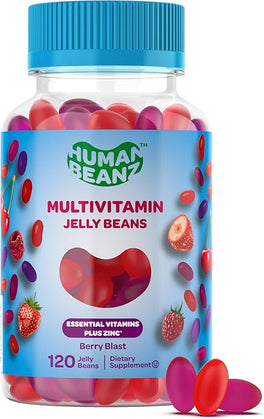
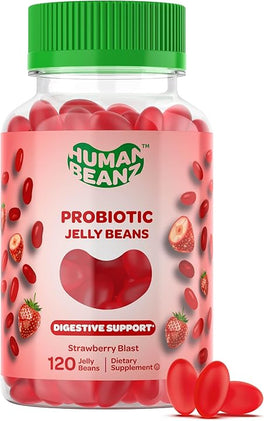
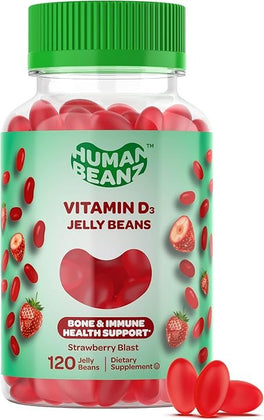
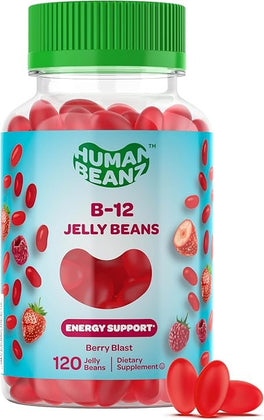
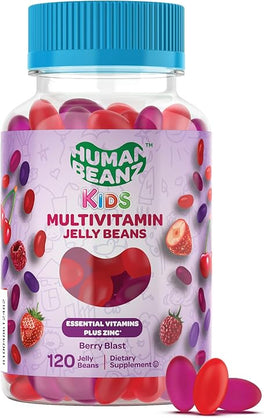
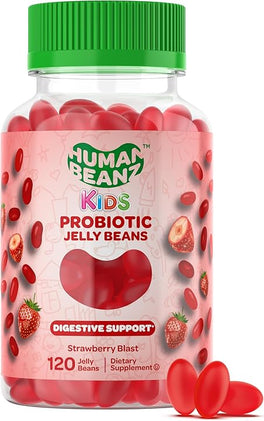
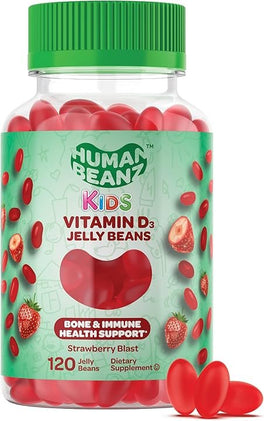

Short answer: Human Beanz Kids comes in three formulas: Multivitamin + Zinc, Vitamin D3 and Probiotic. Each is two real jelly beans a day for kids aged 2 and up, 9-Way Free and colored with natural extracts. The ground rules: no children under 2, beans get chewed, you hand them out, and your pediatrician gets a say before you start.
Why a jelly bean works for kids
If you've tried kids' vitamins before, you know the options. Chalky tablets that end up under the table. Sticky gummies that melt into one blob in the bottle. Liquids that require a negotiation, a bribe and a towel.
Human Beanz are real jelly beans with a solid outer shell. The shell protects the ingredients inside, keeps every bean separate and free-flowing, and means every bean is consistently dosed. More importantly, from a kid's point of view, it's a jelly bean. The daily vitamin stops being a battle and starts being the part of breakfast they remind you about.
Curious how jelly beans stack up against gummies? Here's our jelly beans vs. gummy vitamins comparison.
Meet the Kids lineup
| Formula | Per serving | Beans per day | Servings per bottle | Flavor |
|---|---|---|---|---|
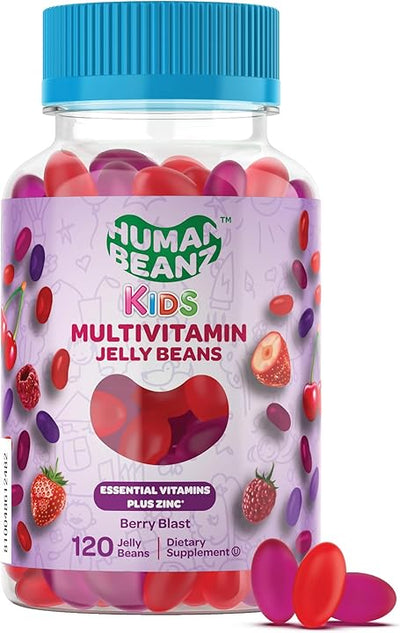
| Kids Multivitamin + Zinc | 13 vitamins and minerals | 2 | 60 | Berry Blast |
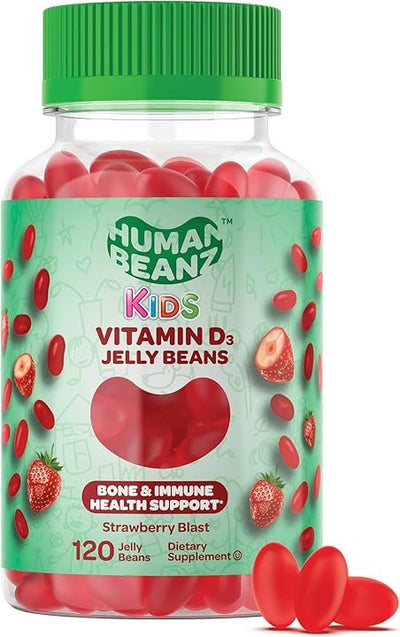
| Kids Vitamin D3 | 1,000 IU (25 mcg) vitamin D3 | 2 | 60 | Strawberry Blast |
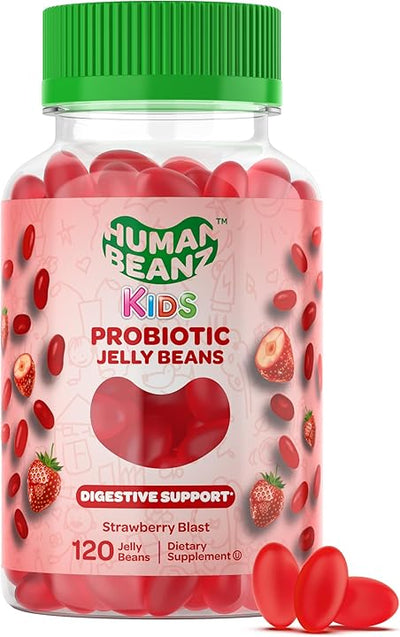
| Kids Probiotic | 1 billion CFU Bacillus coagulans | 2 | 60 | Strawberry Blast |
Kids Multivitamin + Zinc: 13 vitamins in, zero tantrums out
Getting kids to eat a balanced diet is hard enough. The Kids Multivitamin + Zinc covers 13 essential nutrients in two Berry Blast beans: vitamins A, C, D2 and E, niacin, B6, folate, B12, biotin, pantothenic acid, iodine, zinc and chromium. Zinc and vitamins A, C and D support a healthy immune system and normal growth, and the B vitamins support everyday energy and healthy brain development.
It's the natural starting point if your child is a picky eater, or if you just want one bottle that covers the basics.
Kids Vitamin D3: sunshine for the days the sky can't be bothered
Vitamin D is one of the nutrients kids most often fall short on, since many don't get enough sunlight or vitamin D from food. Kids Vitamin D3 delivers 1,000 IU of cholecalciferol per serving. That's the same form of vitamin D the body makes from sunlight, and it supports strong bones, healthy teeth, calcium absorption and immune function. Per serving, that's 167% of the Daily Value for ages 2 to 3 and 125% for ages 4 and up.
Kids Probiotic: for little digestive tracts still figuring things out
About 70% of the immune system lives in the gut, which makes gut health a pretty big deal for growing kids. Kids Probiotic packs 1 billion CFU of Bacillus coagulans into every serving. It's one of the most resilient and well-studied probiotic strains, and it supports healthy gut flora, digestive comfort and immune function. No refrigeration, no powder to mix into a drink they'll refuse anyway.
How to give them: the rules that matter
1. Ages 2 and up only
Human Beanz are not suitable for children under 2 years of age because of the choking risk. No exceptions, no "just a half."
2. Two beans, chewed
Each kids formula is two jelly beans a day. Make sure they chew thoroughly before swallowing, and don't go over the recommended amount. More beans is not more better.
3. You're the dispenser
Here's the thing about vitamins that taste like candy: they taste like candy. Keep the bottle somewhere your kids can't reach, hand out the daily serving yourself, and call them vitamins, not sweets. The goal is a kid who's excited about their vitamin, not a kid who's figured out where the bottle lives.
4. Loop in your pediatrician
Check with your pediatrician before starting any supplement, and especially if your child has a medical condition, takes medication, or you're planning to combine formulas.
Making it a habit (without a negotiation)
The best vitamin is the one that actually gets taken, every day. A few things that help:
- Anchor it to something that already happens. Breakfast is the classic. Vitamins come out when the cereal does.
- Same time, same place. Kids love a routine, even when they claim they don't.
- Let them own a little of it. Let them pick which bean goes first, or tick off a calendar.
- Keep it low-key. No big speeches about nutrients. It's two jelly beans. Treat it that way.
Pro tip: keep the bottle where you will see it every morning, like next to the coffee maker, but up high where little hands can't get to it. Out of sight is out of mind, for parents too.
Can kids take more than one formula?
Some families pair the Kids Multivitamin with the Kids Probiotic for a basics-plus-gut routine. One thing to know before you stack: the Kids Multivitamin already contains vitamin D (as D2), so if you're thinking about adding Kids Vitamin D3 on top, run the combination past your pediatrician first.
Buying for the whole family? Build your bundle lets you mix kids and adult bottles in one set: 2 bottles save 5%, 3 save 10%, and 4 or more save 15%. (During a sitewide sale, the sale price takes over instead.) Not sure what the grown-ups need? Our guide to the whole lineup covers the adult range too, or let the quiz decide.
Storing them
Keep the bottle at room temperature, away from direct sunlight and excessive heat. No refrigeration needed, even for the probiotic. The solid shell keeps the beans from sticking together, so the last serving in the bottle looks like the first.
Frequently asked questions
What age can kids start taking Human Beanz Kids?
Human Beanz Kids are for children aged 2 and up. They're not suitable for children under 2 because of the choking risk. Check with your pediatrician before starting any supplement.
How many jelly beans should my child take?
Two jelly beans a day for each kids formula. Make sure they're chewed thoroughly, and don't exceed the recommended dose on the label.
Are they allergen-friendly?
Yes. Every Human Beanz product is 9-Way Free: no gluten, dairy, nuts, soy, eggs, gelatin, artificial colors, artificial flavors or preservatives. They're vegetarian too.
Do they contain sugar?
Most Human Beanz contain a small amount of sugar as part of the jelly bean base. Full ingredient and nutrition information is on each product page.
Where do the colors come from?
Natural sources like black carrot and hibiscus extracts. No artificial dyes, no synthetic flavors.
*These statements have not been evaluated by the Food and Drug Administration. This product is not intended to diagnose, treat, cure, or prevent any disease.